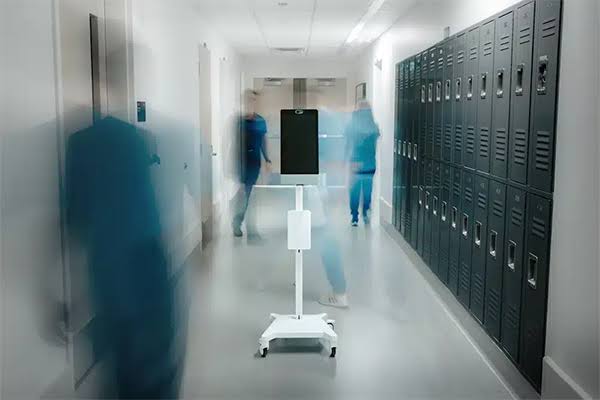
Healthcare staff locker areas need secure personal storage, easy-to-clean surfaces, adequate capacity for rotating shifts, and placement that supports the separation of personal items from clinical spaces. Nurses, physicians, technicians, and support staff depend on these areas at the start and end of every shift.
The United States has more than 3 million registered nurses (U.S. Bureau of Labor Statistics).
Why do healthcare facilities need dedicated staff storage?
Healthcare facilities need dedicated staff storage because clinical areas are not appropriate places for personal bags, coats, phones, and food. Keeping personal items out of patient care areas supports infection prevention and reduces clutter at workstations.
Changing into scrubs and uniforms
Staff in nursing, surgical, and laboratory roles also change into scrubs or uniforms. Locker areas give them a private, secure place to store street clothes during their shift.
How do infection prevention priorities affect locker design?
Infection prevention priorities affect locker design by favoring surfaces that are smooth, nonporous, and able to withstand frequent cleaning with healthcare disinfectants. Environmental cleaning plays a defined role in infection prevention in healthcare settings (Centers for Disease Control and Prevention).
Design features that support cleaning
- Nonporous surfaces that resist moisture and stains
- Smooth door faces without deep crevices
- Sloped or closed tops that prevent dust accumulation
- Bases or legs that allow floor cleaning underneath
- Materials that tolerate repeated disinfection
Solid plastic and phenolic lockers suit areas with frequent cleaning or humidity, while powder-coated steel works well in dry staff areas.
Which clinical support areas use HDPE lockers
HDPE lockers are specified for nurse areas, lab support rooms, and kitchenettes because their nonporous surfaces clean easily in food-adjacent and wellness spaces (ASI Storage Solutions).
Where should staff lockers be located?
Staff lockers should be located near staff entrances or in dedicated staff support areas, away from patient care zones, so employees can store belongings before entering clinical spaces. Placement also affects how quickly staff can change and report to their units.
Location considerations
- Proximity to staff entrances and time clocks
- Separation from patient and public areas
- Access to restrooms and showers
- Nearby breakrooms for meal storage
- Routes to clinical units that minimize travel
Large hospitals may have centralized locker rooms as well as smaller locker areas on individual units. Unit-based lockers reduce travel time for staff who need access to belongings during breaks.
How should facilities plan locker capacity for rotating shifts?
Facilities should plan locker capacity based on total staff across all shifts, not just the number working at once. Staff often keep items in their lockers between shifts, so each person typically needs a dedicated locker.
Planning for shift overlap
Shift overlap adds another factor. During shift change, both departing and arriving staff need access to locker areas at the same time. Adequate aisle space and bench seating prevent congestion.
Temporary lockers for float and contract staff
Travel nurses, float staff, and contract workers may need temporary lockers. Day-use lockers with combination or electronic locks serve these users without permanent assignments.
What storage needs go beyond personal items?
Storage needs beyond personal items include uniforms, scrubs, and personal protective equipment. Some facilities issue scrubs through dispensing systems, while others store clean uniforms on shelves or in dedicated cabinets.
Additional storage considerations
- Clean scrub storage separate from used scrub collection
- Storage for personal protective equipment
- Secure storage for personal medications
- Space for bags, lunch coolers, and coats
- Charging access for phones and devices where permitted
How do locker areas support staff well-being?
Locker areas support staff well-being by giving healthcare workers a private, secure space to prepare for and recover from demanding shifts. A well-designed locker area with seating, mirrors, and adequate lighting contributes to a more supportive workplace.
Support spaces and worker health
Healthcare workers face specific workplace hazards, including exposure risks and workplace stress (Occupational Safety and Health Administration). Providing adequate support spaces, including locker rooms and breakrooms, is one part of creating a healthier work environment.
What security features matter for healthcare staff lockers?
Security features that matter for healthcare staff lockers include reliable locks, sturdy latching, and doors that resist forced entry. Staff store valuables such as wallets, keys, and electronics during long shifts.
Badge, combination, and padlock options
Electronic locks that use staff badges add convenience and allow administrators to manage access. Keyless combination locks reduce lost keys. Padlock hasps give staff the option to use their own locks.
How should healthcare lockers be maintained?
Healthcare lockers should be maintained through scheduled cleaning, hardware inspection, and prompt repair of damaged components. Environmental services teams can include locker exteriors in routine cleaning schedules.
Maintenance practices
- Clean exterior surfaces on a set schedule
- Inspect locks and latches regularly
- Remove unclaimed items when staff leave the organization
- Repair damaged doors promptly to maintain security
- Replace worn hooks and shelves
How do locker areas support shift change handoffs?
Locker areas support shift change handoffs by allowing staff to prepare quickly and arrive on their units on time for report. Congested or poorly located locker rooms add minutes to every shift start, and those minutes add up across an entire nursing staff.
Features that reduce bottlenecks
Wide aisles, adequate benches, and good lighting reduce bottlenecks during peak periods. Facilities that locate locker areas along the path from staff parking to clinical units help employees move directly from arrival to their assignments.
Why are staff locker areas part of clinical infrastructure?
Staff locker areas are part of clinical infrastructure because they support infection prevention, workflow efficiency, and staff retention. When clinicians have reliable, clean, and secure storage, they can focus fully on patient care. Healthcare facilities that invest in thoughtful locker areas show their teams that support spaces matter as much as patient-facing ones.